

E-commerce · Pharmaceuticals, supplements, cosmetics and hygiene
Daroobin: an online pharmacy with batch tracking, expiry dates and FEFO allocation
An online pharmacy and cosmetics shop on .NET 10: multi-batch inventory with lot numbers and expiry dates, FEFO allocation, three payment gateways, scheduled campaigns and flash sales, and margin reporting.
- Client
- Daroobin
- Industry
- Pharmaceuticals, supplements, cosmetics and hygiene
- Year
- 2025
- Status
- Delivered, under support
- Discovery and analysis
- UX and UI design
- Software architecture
- Front-end development
- Back-end and API development
- Database design
- Third-party integrations
- Data migration
- Deployment and DevOps
- Technical SEO
- QA and testing
- Support and ongoing development
The result, in numbers
- FEFO
- allocation by nearest expiry
- 3
- integrated payment gateways
stock held per batch, not per product
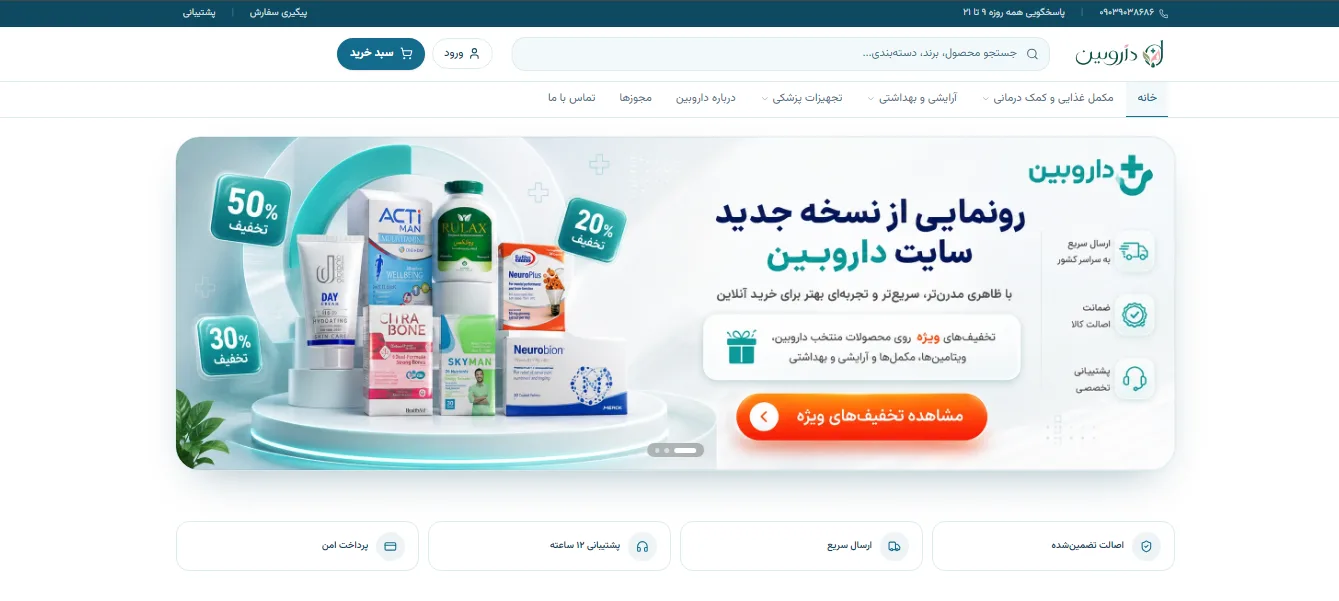
The challenge
Selling medicines and supplements is not like selling ordinary goods, and that is where an off-the-shelf shop falls short.
One product, several different stocks. A single medicine may sit in the warehouse across three separate deliveries, with three lot numbers and three expiry dates. "Stock: 40" is meaningless if you do not know which forty, and which of them expires in two months. Nor is the order of sale arbitrary: the nearest to expiry has to go first, or stock is left on the shelf and written off.
Several warehouses, several suppliers. The same product arrives from two suppliers at different purchase prices, and for the margin to be real you have to know which batch each sale came out of.
The previous shop was WordPress and WooCommerce. Replacing it meant migrating the catalogue, customers and orders, and more importantly preserving the SEO paths — URLs that rank must not break.
The solution
A bespoke platform was built as a modular monolith with three independent parts — storefront, admin panel and API — layered into Domain, Application, Infrastructure and API.
The heart of it is date-aware inventory. Stock is held per batch rather than per product: lot number, expiry date, supplier and warehouse. Allocation follows FEFO — nearest to expiry first — and a stock ledger records every receipt, issue, transfer and adjustment. The system warns on near-expiry and low stock, and reservations on unpaid orders release automatically.
Pricing and campaigns are managed separately from stock: base and special prices, price history, bulk editing, coupons, flash sales and festivals — all with scheduled activation, so a campaign is set up in advance and starts and ends on its own.
Three payment gateways — ZarinPal, Behpardakht Mellat and Saman Kish — with gateway selection, a default, and secure verification. Heavy work runs on RabbitMQ with MassTransit and scheduled jobs under Quartz, so placing an order never waits on an SMS, an invoice or a feed update.
The WooCommerce migration preserved the catalogue, customers and orders and redirected the old URLs, with product and breadcrumb structured data.
Key features
Date-aware inventory with lot numbers
Stock per batch: lot number, expiry date, supplier and warehouse — not one number for the whole product.
FEFO allocation
The stock closest to expiry is allocated first, so goods are not left to be written off.
Stock ledger and transfers
Every receipt, issue, transfer and adjustment is recorded; you can always say where an item came from and went.
Scheduled campaigns and flash sales
Base and special prices, history, bulk editing, coupons and festivals — with activation and end times, so a campaign runs itself.
Three payment gateways
ZarinPal, Behpardakht Mellat and Saman Kish with selection, a default, and secure verification.
Warehouse and packing operations
Printing invoices, labels and picking and packing lists, tracking-code capture, and automatic SMS on order events.
Margin reporting
Sales, finance, margin, inventory and returns on Jalali dates — and because a sale is tied to its batch, the margin is real rather than estimated.
Torob feed and WooCommerce migration
A dynamic product and stock feed for Torob, and a full migration with redirects so rankings survive.
Architecture and stack
- Style
- Modular monolith
- Patterns
- Clean architectureCQRSEvent-driven
A modular monolith with Domain, Application, Infrastructure and API separated: the operational simplicity of one deployment, with boundaries that allow a part to be split out later.
Three independent parts: the storefront on Next.js 16 and React 19, the admin panel on React with Vite, and an API with versioned contracts and OpenAPI documentation.
Data: PostgreSQL is the source of truth, with EF Core for writes and Dapper for reports whose queries have to be exact and fast — a margin report over hundreds of thousands of rows through a general-purpose ORM is a performance bug in itself. Redis holds cache and sessions.
Background work: SMS, invoices, the Torob feed and heavy processing go onto RabbitMQ with MassTransit, and scheduled jobs run under Quartz. A customer placing an order never waits behind any of them.
Container deployment with Docker and nginx, structured logging with Serilog, and releases with a backup, health checks and rollback — because this shop is trading while it is being updated.
- Front end
- Next.jsReact.jsTypeScriptTailwind CSS
Storefront — Next.js 16 and React 19, Persian and RTL
- Front end
- Vite
Responsive admin panel with TanStack Query
- Back end and API
- .NET 10ASP.NET CoreC#REST APIClean ArchitectureEntity Framework CoreDapper
EF Core for writes, Dapper for heavy reporting
- Database
- PostgreSQL
- Cache
- Redis
- Messaging and queues
- RabbitMQMassTransitQuartz.NET
SMS, invoices, the Torob feed and scheduled jobs
- Infrastructure and deployment
- DockernginxSerilog
Container deployment with backups, health checks and rollback
Integrations
- ZarinPal, Behpardakht Mellat and Saman Kish
- Torob — a dynamic product and stock feed
- SMS.ir for order-event notifications
- Neshan maps for customer address positions
Full write-up
Capabilities in detail
Catalogue
Multi-level categories, brand and licensing country, conditional specifications by product type, simple and variable products with unlimited attributes, image galleries, SKU and GTIN, and publication status.
Date-aware inventory
Multiple warehouses and suppliers, independent stock per variant and per batch, lot numbers and expiry dates, physical and online stock kept apart, transfers between warehouses, a stock ledger, FEFO allocation, low-stock and near-expiry alerts, and automatic reservation and release against orders.
Pricing and campaigns
Base and special prices, price change history, bulk price editing, discount coupons, flash sales, festivals, and scheduled activation and expiry for every campaign.
Orders and operations
Orders placed by customer or operator, order, payment and shipping status management, printing of invoices, labels and picking and packing lists, tracking-code capture, SMS on order events, and returns with review and refund.
Payments
Three gateways — ZarinPal, Behpardakht Mellat and Saman Kish — with gateway selection, a configurable default, a controlled callback and secure verification.
Shipping and tracking
Dynamic zones and shipping methods, addresses with a map position, postal tracking codes and order-status notifications.
Customers
One-time-code login, profiles, multiple addresses, wish lists, reviews, support tickets, return requests, back-in-stock alerts and a loyalty club.
SEO
Canonicals, sitemap, robots, index and noindex control, redirects for old links, and product and breadcrumb structured data.
Management reporting
Sales, finance, profit margin, inventory, returns, support and customer analysis — all on Jalali dates. A responsive dashboard, separated roles and permissions, and a history of administrator activity and sensitive changes.
Content and integrations
Pages, blog, banners, menus and media; a dynamic product and stock feed to the Torob comparison service; SMS via SMS.ir; maps for customer addresses; and infrastructure ready for CRM and accounting.
Screens
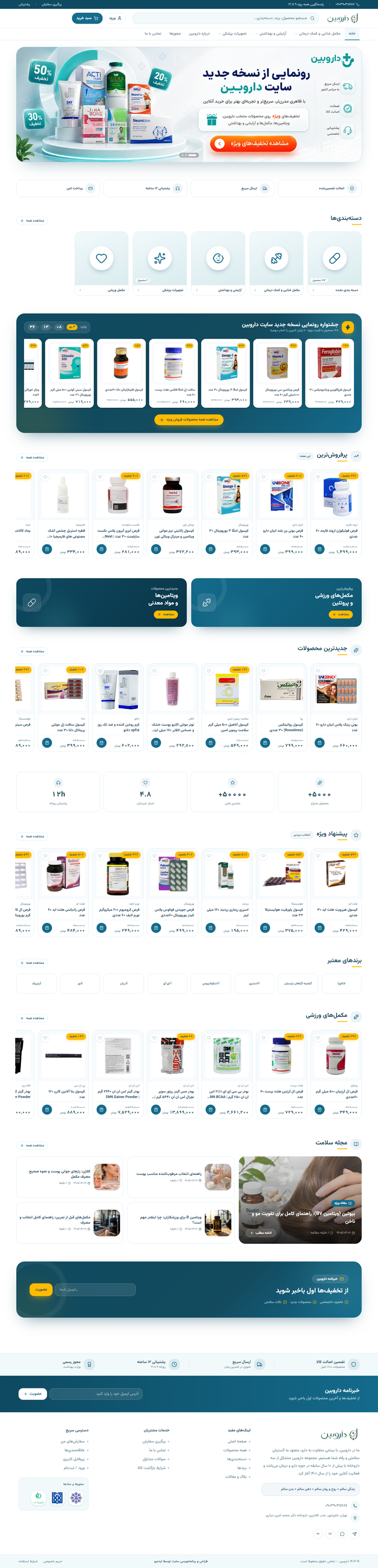
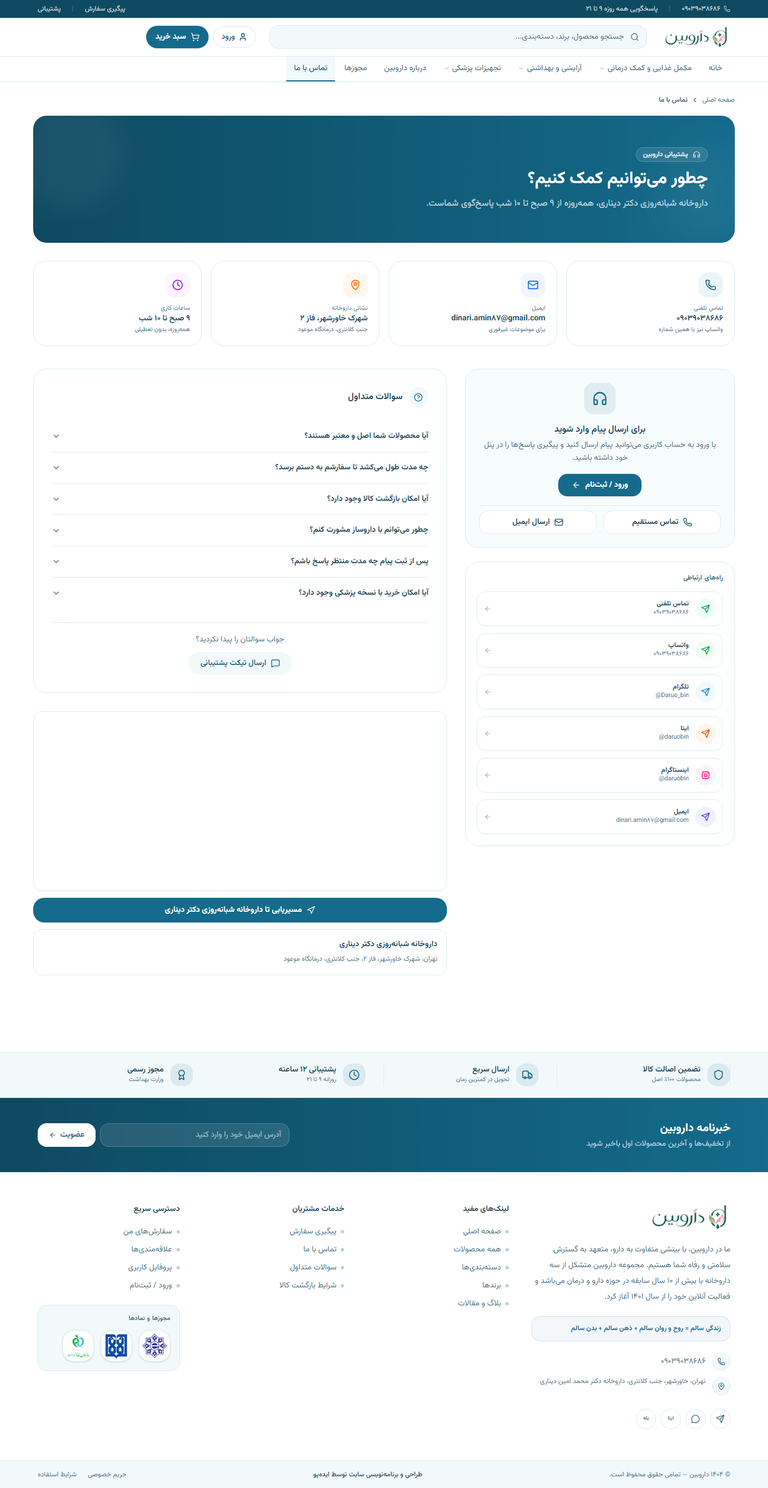
Related services and products
Have a similar project in mind?
Fifteen minutes is enough to say what it needs, how long it takes and where to start.
Similar projects
 Flagship
E-commerce
Zarshop: a bespoke hygiene-products shop with layered stock control and Jalali reporting
A bespoke online shop on ASP.NET Core and Next.js: a thirty-minute stock reservation, weight- and zone-based shipping across five carriers, Jalali-month sales reporting with PDF export, and the migration of more than five thousand historical orders.
- Next.js
- React.js
- TypeScript
- Tailwind CSS
Zarshop, Babol · 2025
 Flagship
Custom software · E-commerce
Robocode: academy, online exams, shop and a partner network on one platform
The integrated platform for the Robocode academy on .NET 10: online and in-person courses, exams with report cards, a shop with wholesale pricing, certificate issuance with QR verification, a partner and instructor panel with commission, and single sign-on from Shad.
- .NET 10
- C#
- Entity Framework Core
- MediatR
Robocode training institute · 2025
E-commerce
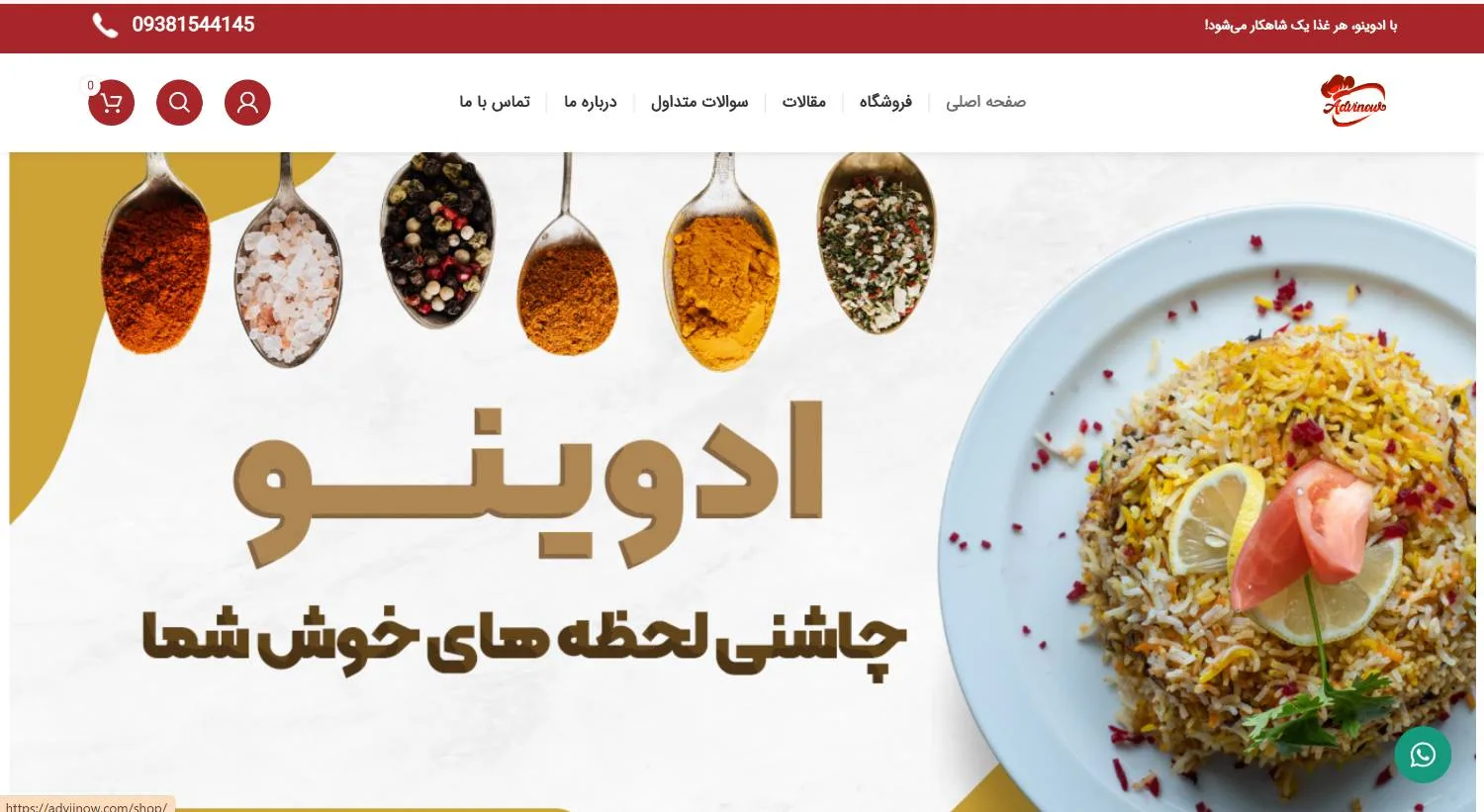
Advino: a specialist spice shop with search and filters that sell
A specialist online spice shop — a catalogue filtered by use and origin, cart and payment, customer accounts and an admin panel — on ASP.NET Core MVC and PostgreSQL.
- HTML5
- CSS3
- JavaScript (ES6+)
- Responsive Design
Advino online shop · 2025